
If you are looking for a car accident lawyer Fairfax VA residents can call after a collision, first focus on safety and health. Then preserve reliable information, communicate carefully with insurers, and get legal advice when questions arise. You do not have to decide fault at the roadside.
By José R. Campos, Esq.
What should you do first after a Fairfax crash?
Move out of traffic if you can do so safely. Check whether anyone needs emergency help and call 911 if there are injuries, a hazard, or another need for emergency response. Do not leave the scene. Follow instructions from responders, and do not put yourself in danger to take photographs or collect information.
When it is safe, exchange names, contact details, driver’s license and vehicle information, and insurance details with the other driver. Note the location, time, direction of travel, weather, and anything unusual about the road. Be civil, but do not argue about fault or guess about what happened. An apology or speculation can be misunderstood later as a statement about responsibility.
If police respond, ask how to obtain the incident report or report number. A report may record an officer’s observations and identify people involved, but it may not answer every question about responsibility. Keep your own notes, too. Write down the names of responding agencies and any instructions you were given.
What evidence should you preserve?
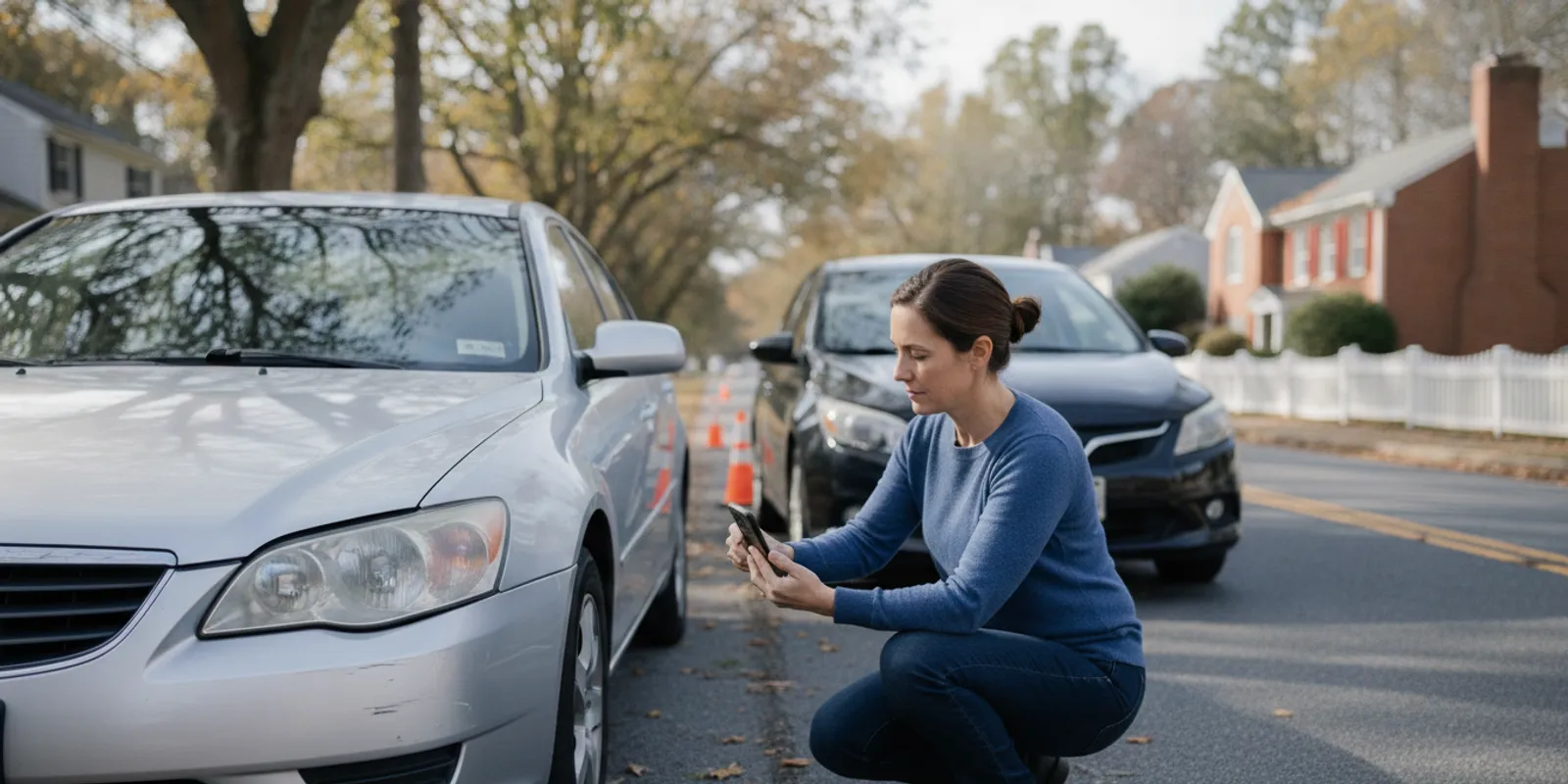
Gather information only when the scene is safe. Photograph the vehicles, their positions, damage, traffic controls, road conditions, and visible debris. Take wide images that show context as well as close views. Save the original files. If you need to mark up a photograph, make a separate copy rather than altering the original.
Ask witnesses for a name and a reliable way to contact them, but do not pressure them to give a particular account. As soon as practical, write down what you remember: your route, what you saw before impact, and what happened immediately afterward. Separate what you directly observed from what you assume. Leave unknown details unknown rather than filling them in with a guess.
- Keep the report number and any exchange-of-information form.
- Save towing, repair, rental, and other crash-related receipts.
- Keep insurer letters, emails, text messages, and notes of phone calls.
- Record missed work and the practical effects of an injury, without exaggerating or estimating a future total.
- Back up photographs and documents securely, keeping original files and dates where available.
A simple evidence log can make the file easier to use. List the date, item, source, and what it may show. For example: “Tuesday, scene photographs, phone, intersection layout and vehicle damage.” The log does not prove who caused the crash by itself. It helps you find and discuss records without relying on memory alone.
Avoid posting a detailed account or crash photographs publicly while facts and injuries are being assessed. Preserve relevant communications instead of deleting them. If you later remember a detail differently, note when and why your recollection changed. A careful, dated correction is more useful than quietly replacing an earlier note.
How should you handle injuries and medical care?
Seek emergency care for urgent symptoms. Some symptoms may become noticeable after the immediate shock has passed. If you develop pain, dizziness, confusion, numbness, or another concerning change, contact a medical professional promptly and explain that it followed a crash. This article is general information, not a diagnosis or substitute for medical advice.
Follow your clinician’s instructions and attend follow-up appointments when possible. Tell your provider about changes and ask questions if a recommendation is unclear. Keep discharge papers, appointment records, prescriptions, and bills together. If cost, transportation, work, or another barrier makes it difficult to follow a care plan, tell the provider and ask about options instead of simply stopping care.
Do not assume that being able to leave the scene means you are uninjured. Do not substitute an adjuster’s or another driver’s opinion for medical advice. Health decisions should be based on guidance from a medical professional; documentation should follow naturally from care, not drive it.
What should you say to an insurance company?
Notify your own insurer according to your policy and provide truthful, basic facts. Record the date and time, the person you spoke with, and any claim number. You can ask the other driver’s insurer how to submit a claim, but you do not need to guess about fault or give a detailed recorded statement on the spot.
Before giving a recorded statement or signing a release, make sure you understand what is requested and what the document covers. A broad medical authorization, for example, may reach records beyond this collision. Ask for documents in writing and take time to review them. Do not make false statements, conceal relevant facts, or destroy records. If a request is unclear or you feel pressured, consider seeking legal advice before responding.
Keep discussions factual. Avoid promising not to pursue a claim, agreeing to a quick payment before understanding its effect, or estimating final treatment costs while care is ongoing. Save every offer and any explanation of how it was calculated. Ask what a proposed payment covers and whether signing would release other claims. An offer is not automatically a full assessment of your losses.
Why do Virginia fault rules and deadlines matter?
Virginia has specific negligence rules that can make fault important. Under the state’s contributory-negligence rule, a finding that an injured person’s own negligence contributed to the accident can bar recovery in many cases. Applying the rule depends on evidence and legal analysis; a roadside impression is not a final liability decision. Do not assume one uncertain detail settles the whole question.
Virginia generally sets a two-year limitation period for personal-injury actions, but exceptions and other deadlines may apply. Claims involving a government entity, a minor, or a different kind of loss can raise additional issues. The Virginia Legislative Information System is an official starting point for Virginia law, but checking a general resource is not the same as calculating a deadline for a particular claim. Preserve documents and get advice early enough to review the facts and rules that may apply.
Do not wait for an insurer to finish its review before asking whether a legal deadline applies. A claim discussion, an insurance form, or a settlement conversation does not necessarily extend a court filing period. Keep any notice that mentions a response date, and ask what it requires. The date printed in a letter and a statutory deadline may be different things.
When might it help to speak with a lawyer?
Legal guidance may be useful when someone was seriously hurt, fault is disputed, multiple vehicles were involved, an insurer requests a recorded statement or release, or a potential claim involves substantial medical care or missed work. It can also help if you are unsure which deadline applies or whether a settlement document would close out future claims.
A lawyer can review available facts, explain the process, and discuss possible options. No one can responsibly promise a particular result based only on a brief description. The Law Offices of Campos & Associates offers a free initial consultation for personal injury matters. The firm handles personal injury matters in Virginia, Maryland, and Washington, DC; rules depend on where the crash and claim are located.
Before a conversation, organize a short timeline, the report number, photographs, insurance correspondence, and medical records you already have. You do not need a perfect file. A clear account of what you know—and what remains uncertain—is a useful starting point. The firm offers help in English and Spanish, so use the language in which you can explain details clearly.
How can you prepare before calling?
Write down questions and dates of important events. If you received a letter, offer, or deadline, bring the full document, including attachments. Keep track of any response date stated in the letter, but do not assume it replaces a legal deadline. Ask what a document means before signing something you do not understand.
A one-page timeline can make an initial discussion more useful. Include where and when the crash happened, who was present, when symptoms began, what care you received, what you told insurers, and what they asked you to do. Mark uncertain dates or details instead of presenting them as exact. If someone else is helping organize records, note which statements are yours and which details came from another person.
- Where and when did the collision occur?
- Who was involved, and do you have witness contact information?
- What care have you received, and what care is still being considered?
- What have you told each insurer, and what have they requested?
- Have you received a release, payment offer, or deadline notice?
- Which details remain unclear or disputed?
In the first call, it is reasonable to ask whether the firm handles matters in the relevant state, what documents would help, how communication works, and what the next step would be. You do not need every record or a complete theory of fault before asking questions. Be straightforward about facts that may be unfavorable as well as favorable; accurate advice requires an honest account.
For more information about the firm’s work, you can visit its legal services page or browse the firm’s article library. When reviewing general information, check that it concerns the state where the collision and claim arise. A Maryland or DC rule may not answer a Virginia question.
How do next steps differ by situation?
The priorities are broadly similar, but the first practical step can vary. Use this comparison as a planning aid, not a legal determination:
| Situation | Practical first focus | Records to keep |
|---|---|---|
| Injury or urgent symptoms | Get appropriate medical help and follow clinical instructions | Visit records, care instructions, bills, and symptom notes |
| Disputed facts | Preserve original scene information and avoid speculation | Photos, witness contacts, report number, and dated account |
| Insurer requests a statement or release | Understand the scope and terms before responding or signing | The request, response, claim number, and any offer |
| Unclear deadline or serious loss | Get advice promptly about applicable rules and dates | Notices, correspondence, and a timeline of events |
For instance, someone with no immediate symptoms may still keep the report number and watch for changes, while a person with urgent symptoms should prioritize care over collecting scene photographs. If an insurer sends paperwork while treatment is ongoing, preserve it and make sure you understand the requested action before deciding how to respond. Different circumstances call for different priorities; a table cannot replace advice tailored to the facts.
For a useful first discussion, organize documents by type rather than trying to decide which items prove your case. Put photographs together, keep medical records separate from insurance letters, and place the timeline at the front. This makes it easier to locate a detail when asked and reduces the chance that an estimate or assumption is mistaken for a confirmed fact.
Language also matters when preparing your account. Ask questions in English or Spanish, whichever lets you explain details clearly, and make sure you understand any document before signing it. If a document is translated or explained, keep a copy of the original request as well so you can compare the two if questions arise.
Call (240) 432-7249 to discuss your next steps
Frequently asked questions
Should I call the police after every collision?
Call 911 when there are injuries, a hazard, or a need for emergency response. For other crashes, follow applicable Virginia reporting requirements and directions from authorities. If uncertain, prioritize safety, exchange information, and seek guidance rather than leaving without addressing immediate needs.
Should I accept an insurer’s first offer?
You do not have to decide immediately. Ask what the offer covers, whether it requires a release, and whether it accounts for losses known so far. If treatment is continuing or the terms are unclear, consider legal advice before signing.
Can I ask for help if I am unsure who caused the crash?
Yes. You do not need to determine fault before asking questions. Preserve the facts and avoid assumptions; responsibility may require reviewing statements, photographs, reports, and other evidence.
What if I think I was partly at fault?
Do not decide your rights based only on an initial impression. Virginia’s negligence rules can make fault significant, and details matter. A lawyer can review the evidence and explain how the rule may apply to the circumstances.
After a collision, focus first on safety and health, then preserve records and communications that can help clarify what happened. If you have questions about a Fairfax crash, a timely conversation can help you understand practical next steps without assuming an outcome.